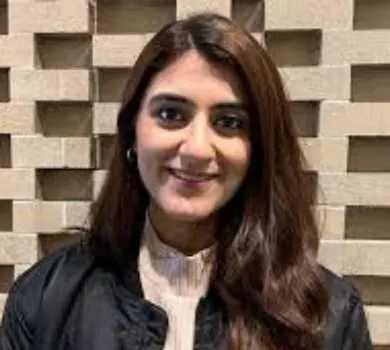
Riddhi Jad
She is a dual-qualified lawyer practicing in India and New York,
Riddhi Jad is a dual-qualified lawyer licensed to practice in both India and New York. She earned her Master of Laws (LL.M.) from Harvard Law School in 2023 and is a graduate of National Law University, Delhi (NLU Delhi). Previously, she practiced at Khaitan & Co LLP, a leading Indian law firm. Riddhi is also an advocate at the Supreme Court of India and has been involved in various legal and policy initiatives. She has actively participated in panel discussions and masterclasses, such as those organized by the National Judicial Reforms Council and the Global Governance Initiative, focusing on topics like judicial reforms and the intersection of law and ethics. in addition to her legal career, Riddhi is committed to community engagement and has volunteered for alumni events organized by Harvard Law School, including those in New Delhi. her professional journey reflects a strong dedication to legal practice, policy advocacy, and community involvement.
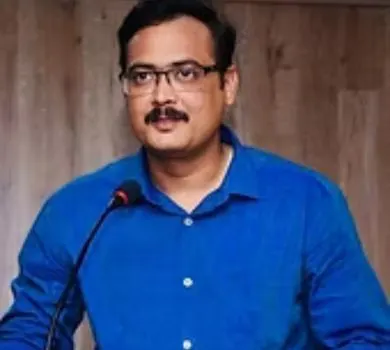
Prof. Balaganapathi Devarakonda
Professor of Philosophy at the University of Delhi
Professor Balaganapathi Devarakonda is a distinguished philosopher and academic, serving as a professor of philosophy at the University of Delhi, with expertise in Indian philosophy, early Buddhism, and philosophical practice.
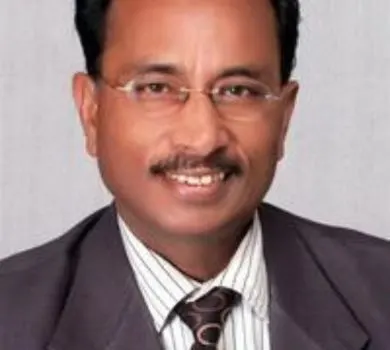
Prof. Sebastian Velassery
UGC [Ameritas]
Professor Sebastian Velassery is an esteemed philosopher specializing in Indian philosophy, phenomenology, and social philosophy. He is currently serving as a professor (re-employed) in the Department of Philosophy at Panjab University, Chandigarh, India. With a career spanning several decades, he has contributed significantly to academic research and discourse in his fields of expertise. professor Velassery has authored numerous publications, including chapters on apophatic theology and the concept of Brahman in Advaita Vedanta. His scholarly work often explores the intersections of Eastern and Western philosophical traditions, particularly focusing on themes of transcendence and the limitations of language in conveying ultimate reality. in addition to his academic roles, Professor Velassery has been involved in various international collaborations and has served as a visiting professor at institutions such as Jawaharlal Nehru University, New Delhi. His interdisciplinary approach and dedication to philosophical inquiry continue to inspire students and scholars alike.
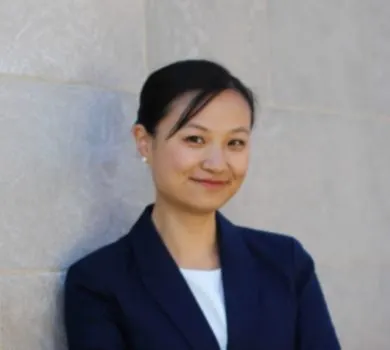
Karen Huang
Assistant Professor
Professor Karen Y. Huang is an assistant professor at the McCourt School of Public Policy, Georgetown University. She is also a Faculty Fellow at the Kennedy Institute of Ethics’ Ethics Lab, and a Faculty Affiliate with both the Center for Digital Ethics (CDE) and the Program for Technology, Ethics, and Society (TES). her interdisciplinary research—rooted in science and technology studies (STS) and political theory—focuses on the governance of digital technologies like AI and social media, the development of conceptual frameworks in digital ethics, and the normative dimensions of knowledge production in public policy. She teaches courses on data ethics, public policy ethics, and ethics in international development. Professor Huang’s work has appeared in top academic journals such as PNAS, Artificial Intelligence, and Science and Engineering Ethics and has been featured in media outlets including The New York Times, NPR, The Atlantic, and the BBC. Her research has received support from the National Science Foundation. She holds a B.A. from Yale University (Ethics, Politics & Economics) and an M.A. and Ph.D. from Harvard University, where she was also a Research Fellow in STS and Faculty Associate at the Berkman Klein Center for Internet & Society.
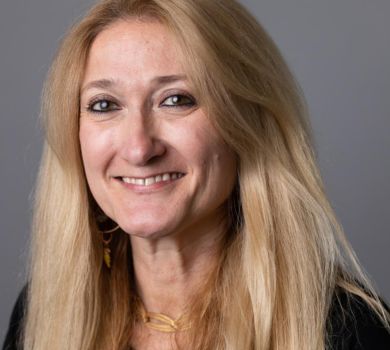
Professor Alessandra Mezzadri
Senior lecturer at SOAS University of London,
Professor Alessandra Mezzadri is a Professor in Development Studies at SOAS University of London. Her research focuses on global supply chains, labour regimes, and inequality, with a particular emphasis on the political economy of labour in the Global South. She has conducted extensive fieldwork in India and has written widely on issues of exploitation, gender, and informality in global production.